









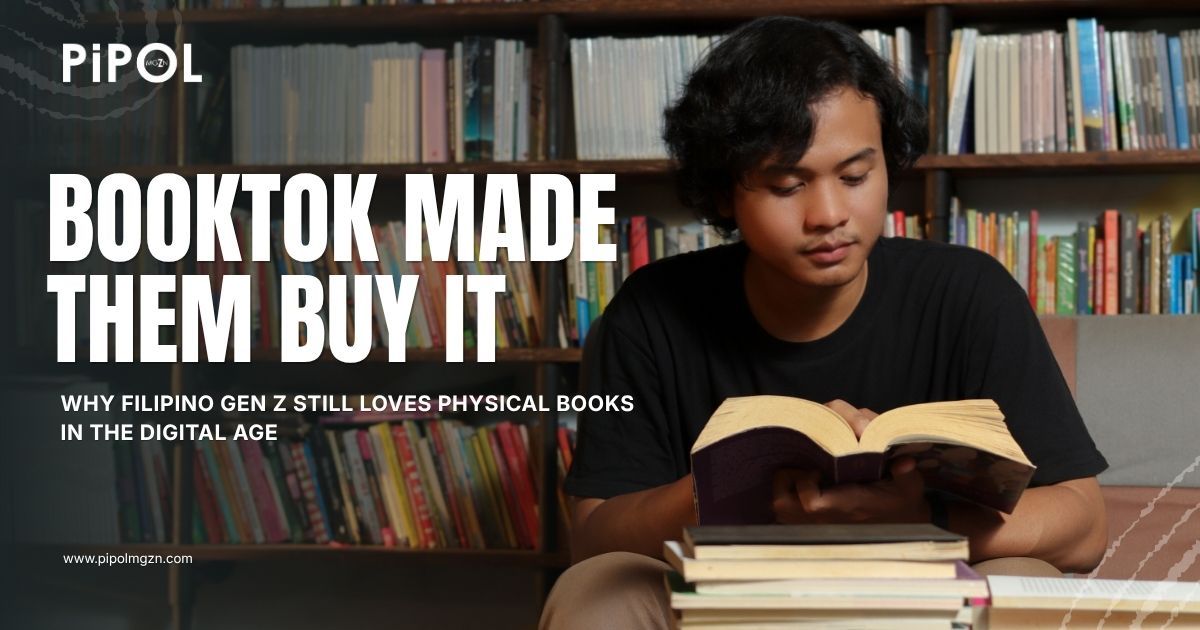
BookTok Made Them Buy It: Why Filipino Gen Z Still Loves Physical Books in the Digital Age
Gen Z grew up online. They stream movies, listen to music on demand, and spend hours scrolling through social media. So you’d think they’d fully embrace digital books too.
Not exactly.

While e-books continue to gain popularity because they’re cheaper, portable, and instantly accessible, many Filipino Gen Z readers are still choosing physical books when it comes to building their personal libraries.
The rise of BookTok, online reading communities, and aesthetic bookshelf culture has turned books into more than just reading material. For many young Filipinos, owning a physical copy is part of the experience. A well-curated bookshelf has become a form of self-expression, much like fashion, music, or room décor.
At the same time, digital reading is becoming increasingly common. Students and young professionals often choose e-books because they are more affordable and easier to carry. Instead of bringing several books while commuting or traveling, readers can store hundreds of titles on a single device. Many e-readers also allow users to adjust font sizes, highlight passages, and read comfortably in different lighting conditions.
Yet convenience has not completely replaced the appeal of print.

Among Filipino readers, physical books continue to hold emotional value. Readers often purchase printed copies of books they have already read digitally simply because they want to collect, display, or revisit their favorite stories. In local book communities, it is common to see readers treating physical books as keepsakes rather than just reading materials.
This trend aligns with broader developments in the Philippine book market. Industry analysts note a renewed interest in printed books, particularly among younger readers who are seeking authentic experiences and stronger connections to local culture and literature.
In reality, Filipino Gen Z readers are not choosing between physical and digital books. They’re using both. E-books provide convenience and accessibility, while physical books deliver the sensory and emotional experience that many readers still value.
For a generation known for embracing technology, the love for turning real pages remains surprisingly strong.
Despite Screens Everywhere, Filipinos Still Prefer Printed Books
In an era dominated by smartphones and social media, printed books remain the top choice for Filipino readers.
According to the 2023 National Readership Survey, 42% of Filipino adults and 47% of children reported reading non-school books within the past year. While digital reading is growing, printed books continue to dominate, with 74% of adults and 75% of children saying they prefer physical books over e-books, online fiction platforms, magazines, or newspapers.
Availability and affordability are the biggest factors influencing what Filipinos choose to read. More than half of readers cited these as their main considerations when selecting a book. Recommendations from friends, family, and even social media also play a role in shaping reading choices.
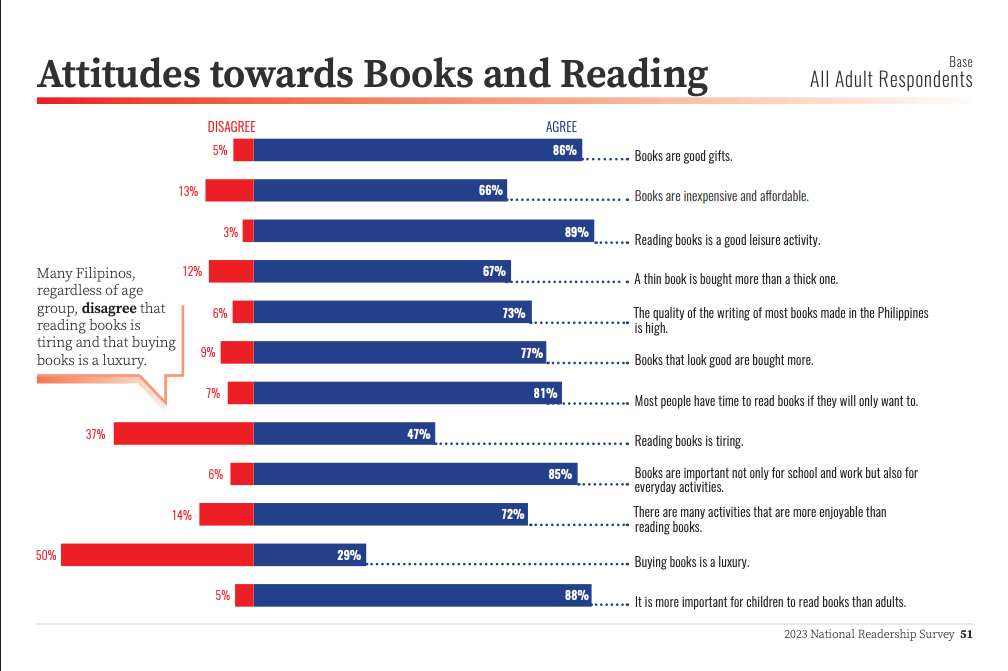
Reading remains a popular leisure activity, especially among younger Filipinos. In fact, children ranked reading higher than browsing social media or surfing the internet. Most readers prefer to read in quiet spaces, with adults choosing to read at home and children often reading in school.
The survey also found that Filipino and English remain the dominant reading languages, though Filipino is still the most commonly used. Meanwhile, interest in reading tends to increase with educational attainment, highlighting the connection between literacy and lifelong learning.
Perhaps the biggest takeaway is that despite endless digital distractions, books continue to hold a meaningful place in the lives of many Filipinos. The format may evolve, but the habit of reading remains very much alive.
Sources
- National Book Development Board (NBDB), 2023 National Readership Survey.
- Statista Market Forecast: Physical Books Market in the Philippines (2025-2026) – Growth trends and consumer behavior in the local book market.
- Philippine Information Agency: REKO digital reading platform and local e-book accessibility.
- Reuters: Reading culture and book access initiatives in the Philippines.
- Discussions from Philippine reading communities on Reddit regarding e-books, Kindle usage, physical book collecting, and purchasing habits.

A Father Who Built a Village
Jay Chang sets first-ever PHILIPPINE MALL TOUR








No Comment! Be the first one.